
Noon on a Saturday and the whole hill smells of black beans. Somewhere below you a pot of feijoada has been going since dawn, a botequim is stacking cold chopp three glasses deep, and a kid is running a bag of Globo biscuits down to the sand. The honest answer to what to eat in Rio de Janeiro is not one dish but a rhythm — cheap by day, slow by evening, almost never eaten alone. This is the carioca food canon the way we run it from the hillside: what it is, how it's eaten, and what it costs in reais in 2026.
Lux Vidigal is our two-story apartment in Vidigal, with the ocean on one side and the Dois Irmãos mountain on the other, and you can check dates and book it on Airbnb.
What to eat in Rio de Janeiro, from the hillside
There is a version of this list that reads like a museum — one paragraph on feijoada, a stock photo of a caipirinha, the word vibrant used twice, and nothing you could actually order. This is not that. We live near the top of Vidigal, we eat out most nights of the week, and we cook the rest from a market ten minutes downhill. What follows is the carioca food canon as it actually runs: the dishes a local eats on repeat, how each one is eaten, and what it costs in reais in 2026. Think of it as the Brazilian food guide we wish someone had texted us before our first trip.
Two things to hold in your head before the first bite. The first is that eating well in Rio is cheap far more often than it is expensive — the finest thing you put in your mouth all week might be an R$8 pastel handed to you in a napkin, still spitting oil. The second is that food here is social before it is anything else. A meal is an excuse to sit down and not get up, and the carioca will happily turn a R$12 chopp into three hours of it. Learn that rhythm and the whole city opens up.
A quick note on money, because it recurs below. Prices are in reais (R$), sampled around Vidigal and the Zona Sul in 2026, and they drift — read them as ranges, not quotes. Sit-down restaurants add a 10% taxa de serviço to the check, technically optional and almost always paid. Pix and cards work nearly everywhere; carry R$50 in cash for the stands. And for the specific spots up on our hill — who does the good moqueca, which botequim to sit at — the Vidigal restaurant guide has the addresses. This piece is the what and the why behind them.
What the canon costs, roughly
Per person, sampled around Vidigal and the Zona Sul in 2026. Reais, not dollars. Service charge extra where noted.
- A prato feito (PF) plate lunch runs R$30–45 with a juice.
- Feijoada on a Saturday: R$50–90 at a botequim, R$140+ at a hotel buffet.
- Churrascaria rodízio: about R$90 on a weekday, R$120–160 at the good houses.
- A caipirinha is R$15 on the sand, R$25–50 at a bar with a view.
Feijoada — the Saturday that eats the afternoon
Start where the week starts, which in Rio is a Saturday lunch that runs until the light changes. Feijoada is the national dish and the closest thing carioca food has to a ritual: a black-bean stew slow-cooked with pork — smoked ribs, salted cuts, sausage, and the odd part of the pig you are better off not asking about — served with white rice, farofa (toasted cassava flour), sautéed couve (collard greens sliced into ribbons), slices of orange to cut the fat, and a caipirinha you did not strictly need. You do not eat it and leave. You eat it, you slow down, you order one more round, and you write off the afternoon. That is the point of it.

The where matters less than the when. Feijoada is traditionally a Wednesday-and-Saturday thing, but Saturday is the institution — half the city is doing the same thing at the same hour. A casual botequim or a per-kilo spot will do a plate for R$50–90; the big hotel and steakhouse buffets, where the dish becomes a spread with a dozen sides and a dessert table, run R$140 and up before the service charge. Our advice for a first feijoada in Rio: skip the fancy buffet, find a neighborhood place with plastic chairs and a queue of locals, and order the version that arrives in the clay pot. Go hungry, go early, clear your calendar. There is no such thing as a quick feijoada, and a rushed one misses the entire idea.
One honesty note, since this is a dish built for a hot climate's cooler months: it is heavy. If the day is 38 degrees and you have beach plans, a full feijoada will end them. Order it on a lazy day, or split one, or save it for the Saturday you have nothing to prove.
The per-kilo lunch, and the plate of the day
If feijoada is the weekend, the weekday engine of carioca eating is lunch by weight. A comida a quilo restaurant is a buffet you serve yourself from — salads, grilled meats, fish, rice and beans, sometimes a sushi corner and a pasta station — after which your plate goes on a scale and you pay for exactly what you took. It is fast, it is honest, and it is the meal most cariocas actually eat five days a week.
- Comida a quilo
- Self-serve buffet, priced by weight. Reckon on R$80–120 a kilo in the Zona Sul, which lands a full plate around R$40–55. You pay for what you take, so a light plate is genuinely cheap.
- Prato feito (PF)
- The plate of the day — a protein, rice, beans, salad, often farofa, cooked to order at a simple lanchonete. R$30–45 with a juice. The best value meal in Brazil, and not a downgrade from anything.
- Executivo
- A slightly smarter sit-down lunch special, R$45–70, common in Leblon and Ipanema on weekdays. A starter-plus-main for close to the price of a main.
The move here is simple: eat your big meal at lunch, when the a-quilo spreads are freshest and the prices lowest, and go lighter at night. It is how the city runs, and it is kinder to both your stomach and your budget. If you are pricing a whole trip this way, the Rio cost breakdown runs the daily food math end to end.
The botequim — petiscos, cold chopp, and the long sit
If you learn one word on this trip, make it botequim — the plain corner bar, plastic tables on the pavement, that is the true living room of Rio. You do not go to a botequim to eat, exactly. You go to sit, to drink cold chopp (draft beer, poured small so it stays cold to the last sip), and to graze on petiscos — the little fried and grilled things that arrive in threes and fours and keep the table going.
The canon of petiscos is short and worth memorizing. Bolinho de bacalhau — salt-cod fritters, crisp outside, soft and salty within — is the one to order first. Coxinha is a teardrop of shredded chicken in dough, breaded and fried, and a good one is a small miracle for R$8–12. Pastel, the thin deep-fried pocket, comes filled with cheese, meat, or palmito and costs R$8–15. Add a plate of batata frita, maybe some aipim frito (fried cassava), a dish of olives, and you have dinner for two for under R$60 that somehow lasts three hours.
The best food to try in Brazil is rarely the most expensive plate on the menu. It is the third bolinho, the second chopp, and the fact that nobody at the table is in any hurry to leave. — the rule we give every guest on night one
Chopp is the fuel and the pricing is friendly: R$8 to R$15 a glass at a boteco, more on a rooftop, less at a hole in the wall. The etiquette is that the glasses keep coming until you cap yours with a napkin or say já chega. Nobody splits a botequim bill at the table — one person pays, everyone squares up by Pix after. And the check is a conta; you have to ask for it, because a waiter who brought it unbidden would be rushing you, and rushing is the one thing a botequim will not do.
Churrasco, açaí, and the padaria morning
Three pillars in one section because they bracket a carioca's day — meat at its center, açaí after the beach, and the padaria before anything else.
Churrasco and the churrascaria
Brazil takes beef seriously, and the cut it is most serious about is picanha — the top sirloin cap, grilled over coals with its fat cap left on, sliced thick, and salted with almost nothing else because it does not need it. You will meet picanha two ways. The first is a simple neighborhood churrasco plate — picanha or linguiça with rice, beans, and farofa for R$35–45, often only on weekends and only until the meat runs out. The second is the full churrascaria rodízio, where waiters move table to table with skewers and carve until you surrender.
How a churrascaria rodízio actually works
The all-you-can-eat steakhouse is a rhythm, not a free-for-all. A few things nobody tells you the first time.
- The disc. You get a small coaster, green on one side, red on the other. Green up means keep the meat coming; red up means stop, let me breathe.
- The buffet is included. There is usually a large salad-and-sides spread, sometimes with sushi and hot dishes. It is part of the price — but every plate of it is a skewer of picanha you did not eat.
- Pace for the picanha. The cheaper cuts come first and fill you up. Wait for the picanha and the fraldinha, and flash the green disc when they appear.
- The price. Roughly R$90 a head on a weekday, R$120–160 at the better houses on a weekend, before drinks and the 10% service. Drinks and dessert are usually extra.
Açaí, the Rio way
Forget whatever açaí means in a bowl at home. In Rio it is a thick, near-frozen purple paste, faintly sour, eaten with a spoon like ice cream — not a smoothie. You order it by size (300ml, 500ml) and it comes loaded with banana, granola, and a pour of condensed milk unless you say otherwise. A loaded 500ml runs about R$16–22. The right time to eat it is straight off the beach, when you are salty and starving and it is somehow both dessert and recovery. ← ask for it na tigela, in a bowl, not blended into a drink

The padaria breakfast
Every carioca morning starts at a padaria, the corner bakery that is half shop and half social institution. The order barely changes: pão na chapa (a split roll flattened and toasted with butter on the griddle), a pingado or a cafezinho (small strong coffee, sweetened by default), and — if you are lucky and the case is fresh — pão de queijo, the small chewy cheese rolls made from cassava starch that vanish the moment they cool. Breakfast standing at the counter costs R$10–20. It is the most reliably good and reliably cheap meal in the city, and doing it every morning at the same place until the counter lady knows your order is one of the quiet pleasures of actually staying here rather than visiting.
Beach food, street food, and cooking it yourself
Some of the best eating in Rio never sees a table, and some of it you make. Start on the sand. Vendors walk the tideline all day calling their wares, and the two you will hear most are Globo and Mate — a bag of biscoito Globo, the airy ring-shaped tapioca biscuit that tastes of almost nothing and is completely addictive, chased with iced Mate tea poured sweet from a steel drum. Together they cost a handful of reais and they are the flavor of a Rio afternoon more than any restaurant dish. You will also be offered grilled cheese on a stick (queijo coalho), shrimp skewers, sarongs, and hammocks; buy the cheese, wave off the rest.

Off the sand, the street canon rewards a wandering appetite. Tapioca — a crepe made from tapioca starch on a dry griddle, folded over cheese and ham or coconut and condensed milk — is R$12–18 and naturally gluten-free long before that was a selling point. Caldo de cana, raw sugarcane pressed to order, is about R$6 of pure cold sugar, best with a squeeze of lime. And the pastel-and-caldo de cana pairing at a street stand or a weekend feira is one of the great cheap lunches anywhere: under R$20 and better than it has any right to be.
Which brings us to the part the restaurant lists leave out. Some of the best food in Rio, you cook. Staying somewhere with a kitchen changes the trip, because the raw materials here are extraordinary and cheap. Ten minutes downhill from Vidigal, the Leblon street feira sets up on Rua Cupertino Durão on Thursday mornings (roughly 7am to 1pm) — trestle tables of mango, papaya, passion fruit, pineapple, fish landed that morning, and, for about ten weeks a year, the best strawberries you will eat. A bag of fruit is a few reais. A whole fish, cleaned while you wait, is a fraction of a restaurant plate.
Buy the fish
- A whole fish at the feira, cleaned to order, for a fraction of a restaurant tab.
- Coconut milk, dendê, lime, coriander, and a tomato from the same stalls.
- Your own moqueca on the terrace as the light goes.
- Total for two: less than one plate out.
Or order it out
- A moqueca for two at a mid-range spot, R$120–180.
- Someone else does the clay pot and the washing up.
- The version to have your first night, before you know the market.
- The meal you photograph; the home-cooked one you remember.
You do not need to be a cook. A picanha needs only coarse salt and a hot pan. Pão de queijo comes frozen from any supermarket and bakes in fifteen minutes. Açaí sells by the tub. The trick is to alternate — eat out for the things that are hard to make at home (the rodízio, the botequim spread, the Saturday feijoada) and cook the simple, brilliant raw ingredients the rest of the time. That balance is most of what our guests end up loving, and it is why the apartment kitchen gets as much use as any restaurant on the hill.
Seafood and moqueca
Rio faces the ocean and eats accordingly. The dish to know is moqueca — a seafood stew simmered in a clay pot with coconut milk, palm oil (dendê), tomato, onion, and coriander, arriving at the table still bubbling. There are two schools: the Bahian version is rich, orange, and unapologetic; the Espírito Santo version is lighter and redder, without the palm oil. Either way it is built to share, served with rice and pirão (a smooth porridge thickened with the broth), and a pot for two runs R$120–180 at a mid-range place. Order it with a cold beer and take your time; a moqueca, like a feijoada, is a meal you plan a day around, not one you grab.
Beyond the moqueca, look for grilled fish of the day (peixe do dia), casquinha de siri (a baked crab gratin served in the shell), and, if you find yourself near São Conrado, the occasional acarajé stand — the Bahian black-eyed-pea fritter split and stuffed with shrimp and vatapá. Ask for pouco pimenta unless you have a point to prove.
The drinks, from caipirinha to cachaça
Carioca food is inseparable from what you drink with it, and the list is short and worth doing properly. tip start every fruit variant from the classic and work outward.
- Caipirinha
- The national drink: cachaça, lime, sugar, ice, muddled together. R$15 on the beach, R$25–50 at a bar with a view. Passion fruit (maracujá) is the best variant; start with a classic lime and earn the rest.
- Chopp
- Draft beer, poured small and cold. R$8–15 a glass. The default social drink, ordered by the round and never really counted.
- Cachaça
- Sugarcane spirit, the base of the caipirinha but worth sipping neat when it is good. A dose at a boteco is R$8–15; artisanal bottles climb from there. Not the same thing as rum, and a good artesanal pour will change your mind about it.
- Guaraná
- The Amazonian-berry soft drink Brazil drinks more of than cola. A few reais a can, and the correct chaser for a plate of feijoada if you are skipping the beer.
- Suco
- Fresh fruit juice, taken seriously. A juice-bar board runs to dozens of options — start with maracujá, abacaxi com hortelã (pineapple and mint), or açaí com banana. R$15–20 a glass, no ice unless you ask.
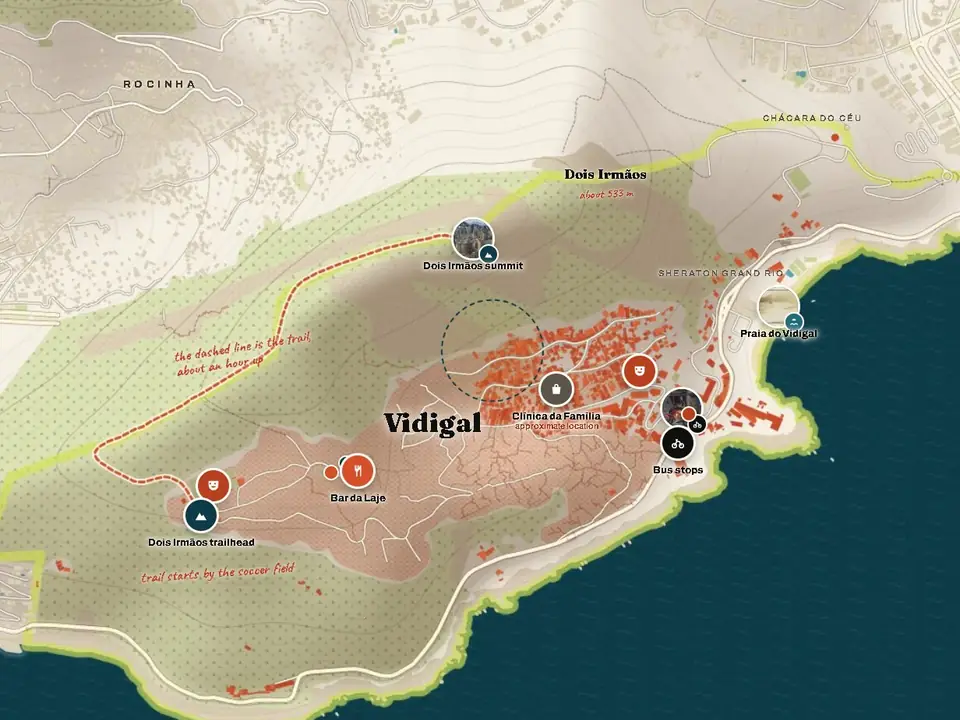
Put it together and a day of eating in Rio has a shape. Coffee and pão na chapa at the padaria before the beach. Açaí when you come off the sand. A long a-quilo or PF lunch that does most of the day's work. Petiscos and chopp at the botequim as the light drops, or, on a Saturday, the feijoada that swallows the whole afternoon and asks for nothing else. For a day-by-day version of how the eating and the sightseeing fit together, the three-days-in-Rio itinerary maps it out, and the sunset drink that ends most of those days is up at Bar da Laje.
Quick questions.
What to eat in Rio de Janeiro on a first trip?
Six things cover the canon. A Saturday feijoada (the black-bean-and-pork ritual). A per-kilo or prato feito lunch (the everyday carioca meal). Petiscos and cold chopp at a botequim (bolinho de bacalhau, coxinha, pastel). Açaí off the beach, in a bowl, with banana and granola. Picanha, either as a simple churrasco plate or the full rodízio. And a moqueca to share on a slow evening. Do those and you have eaten the best food in Brazil without once feeling like a tourist.
How much does a feijoada cost in Rio?
A plate at a casual botequim or per-kilo spot runs about R$50 to R$90. The all-you-can-eat buffet feijoadas at hotels and steakhouses, which turn the dish into a full spread with sides and dessert, run R$140 and up per person before the 10% service charge. It is traditionally a Wednesday-and-Saturday dish, and Saturday lunch is the one to aim for.
What is comida a quilo and how does it work?
It is a self-service buffet priced by weight. You build a plate from the spread — salads, grilled meats, fish, rice and beans — then weigh it at the till and pay for exactly what you took. Reckon on R$80 to R$120 a kilo in the Zona Sul, which lands a normal plate around R$40 to R$55. Because you pay by weight, a light lunch is genuinely cheap, and it is the meal most locals eat on a weekday.
Is the açaí in Rio different from the açaí at home?
Very. In Rio, açaí is a thick, near-frozen purple paste eaten with a spoon like ice cream, faintly sour, usually topped with banana, granola, and condensed milk. It is not the runny smoothie sold elsewhere. Order it na tigela (in a bowl); a loaded 500ml is about R$16 to R$22, and the moment to eat it is straight off the beach.
Is carioca food spicy?
Not really. Brazilian food leans savory and rich rather than hot; chilli is served on the side as a molho de pimenta for you to add. The exceptions are Bahian dishes like acarajé and some moquecas, which can carry heat from dendê and pepper — ask for pouco pimenta (little chilli) if you are unsure.
Can vegetarians eat well in Rio?
Yes, with a little steering. Per-kilo buffets are the easy win — you build your own plate from vegetables, beans, rice, and salads. Tapioca, pão de queijo, açaí, most sucos, and pastel de queijo or palmito are naturally meatless. Vegan is harder because of dairy and the pork stock in beans; learn sem laticínios (no dairy) and ask whether the feijão was cooked with meat. Cooking from the feira solves most of it.
The truth about eating here is that the list stops mattering by day three. You will have your own padaria, your own açaí spot, your own stool at your own botequim, and a bag from the feira in the fridge. This guide exists to get you there faster — to the point where the food stops being a checklist and becomes a routine you will grieve a little on the plane home. That is the whole carioca trick: the best meal you eat in Rio will be a cheap one, eaten slowly, with the window open and the hill going quiet below you.